
Core Objective
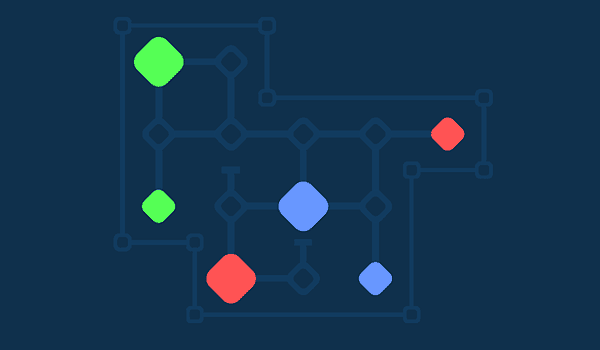
In this puzzle, every tile has a distinct color. Your goal is to slide them so that each color forms a straight, unbroken connection between opposite sides of the grid. Unlike simpler matching games, you must satisfy all color paths at once, which creates a layered challenge. A single misplaced tile can block several routes, so each move requires foresight.
Progression and Complexity
Early puzzles use only two or three colors on a small board, allowing you to learn the mechanics without pressure. As you advance, additional colors appear and the grid expands. Later stages introduce irregular shapes and tiles that share borders with multiple colors, demanding more sophisticated strategies. The difficulty curve is gradual, so you never feel overwhelmed.
Visual Design and Controls
The interface is intentionally minimal. Each tile is clearly colored and outlined, making the board easy to scan at a glance. Sliding is responsive on both touchscreens and mouse-driven devices. There are no timers or score multipliers, which reduces distraction and lets you focus entirely on the puzzle. The background remains neutral to avoid visual clutter.
Strategic Depth
Success depends on thinking several moves ahead. You might start by completing one color path, but later realize that move blocks another. Experienced players learn to identify which tiles are flexible and which are critical. The game rewards patience and systematic thinking rather than speed. Each puzzle can be solved in multiple ways, encouraging creative approaches.
Accessibility and Pace
Because there is no time limit, you can pause and return to a puzzle later. This makes it suitable for short breaks or extended sessions. The lack of pressure also makes it a good choice for younger players or anyone who prefers a calm mental workout. The controls are consistent across devices, so switching between phone and computer feels natural.

Comments
0 comments